How Do Humpback Whales Control Their Buoyancy Underwater?
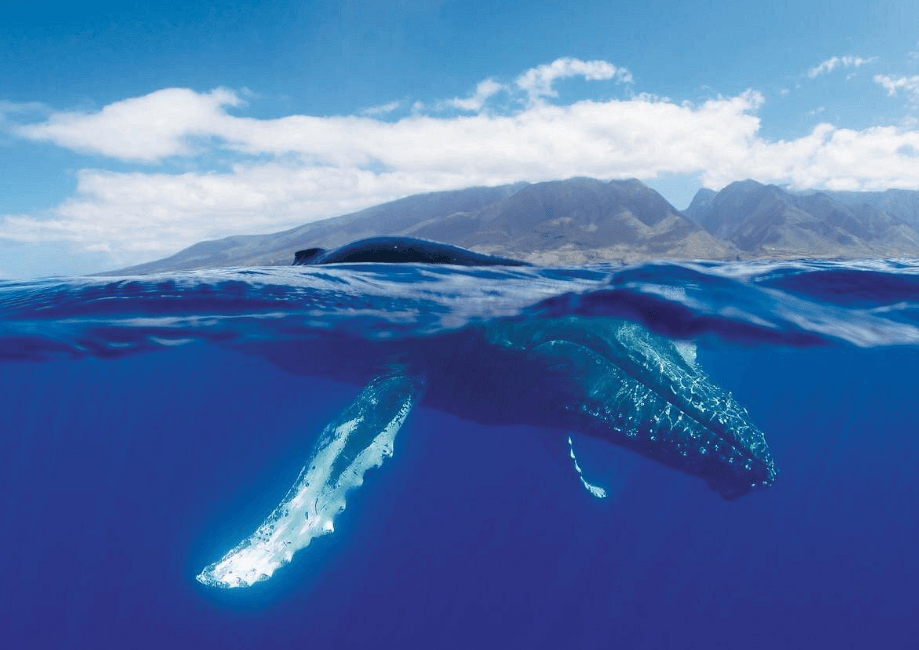
Humpback whales spend much of their lives moving through an environment where gravity and water pressure influence every movement. They swim near the surface, descend below it, and return to breathe. Their ability to move between depths depends on more than the power of their tails: it also involves buoyancy, the tendency of an animal to float, sink, or remain suspended in water.
For visitors watching humpback whales in Samaná Bay, Dominican Republic, these underwater mechanics are usually invisible. A whale may disappear beneath the surface and later reappear somewhere nearby, leaving observers wondering how it controls its position below the waves.
Humpback whales manage buoyancy through the combined effects of their body composition, air in their respiratory system, and changes in depth and swimming effort. They do not rely on a single mechanism, and their buoyancy can change during a dive as water pressure affects the air spaces in their bodies.
This guide explains the science behind whale buoyancy, how it differs from swimming, and why it matters during underwater movement.
What Does Buoyancy Mean for a Humpback Whale?
Buoyancy is the upward force that water exerts on an object immersed in it. Whether an object tends to rise, sink, or remain at a particular depth depends on the relationship between this force and its weight.
The same physical principle applies to humpback whales.
A whale's body displaces a large volume of water. That displaced water produces an upward buoyant force, while gravity pulls the whale downward.
The balance between these forces helps determine whether the animal tends to rise or sink.
Positive, negative, and neutral buoyancy
Three terms are useful for understanding this process.
- Positive buoyancy: The upward buoyant force exceeds the animal's weight, so it tends to rise.
- Negative buoyancy: The animal's weight exceeds the buoyant force, so it tends to sink.
- Neutral buoyancy: The forces are approximately balanced, allowing the animal to remain at a depth without a strong tendency to rise or sink.
These are simplified descriptions. A swimming whale can still move vertically even when its natural buoyancy would tend to move it in the opposite direction.
Why body density matters
Density describes how much mass is contained in a given volume.
An animal whose average density is lower than the surrounding water tends to float, while an animal with greater average density tends to sink. Body tissues, fat, muscle, bones, and air spaces all contribute to overall density.
For a humpback whale, buoyancy is therefore a property of the whole body rather than one individual organ.
How Does Air in the Lungs Affect Whale Buoyancy?
Air is much less dense than water. As a result, air held within an animal's respiratory system can influence its overall buoyancy.
Humpback whales are mammals that breathe air at the surface. They do not extract oxygen from water using gills.
When a whale breathes at the surface, air enters its lungs. The volume of air in its respiratory system can affect its tendency to float.
What happens during a dive?
As a whale descends, the surrounding water pressure increases. That pressure compresses gas-filled spaces, reducing the volume of air they contain.
As the air volume decreases, its contribution to buoyancy also changes.
This is one reason a whale's tendency to rise or sink can differ between the surface and deeper water.
However, it is important not to assume that lung air alone determines the whale's movement. Body composition, depth, swimming activity, and other factors also matter.
Why whales cannot be compared directly with inflatable objects
A whale is not an empty container filled with air. It has a complex body made up of tissues with different densities and mechanical properties.
The air spaces are only one component of its overall buoyancy.
Consequently, a whale's descent cannot be explained simply by saying that it releases all its air or switches its lungs off. The animal's movement results from several interacting physical and biological processes.
Does a Humpback Whale's Body Composition Help Control Buoyancy?
Yes. The tissues that make up a whale's body contribute to its overall density and therefore influence buoyancy.
Muscle, bone, fat, and other tissues have different physical properties. Their combined proportions affect how the whole animal interacts with water.
The role of blubber
Blubber is a thick layer of fat beneath the skin of many marine mammals, including humpback whales.
Its best-known functions include insulation and energy storage. Because fat tissue also has physical properties that differ from those of muscle and bone, it contributes to the whale's overall body composition and buoyancy.
However, blubber should not be described as a dedicated buoyancy-control device. Its role in buoyancy is part of a much larger system involving the entire body.
The importance of body size and shape
Humpback whales have large, streamlined bodies adapted for swimming through water.
Their size affects the amount of water displaced, while the distribution of different tissues affects average body density.
Body shape also influences drag, which is the resistance an animal encounters as it moves through water. Drag and buoyancy are different forces, but both matter when a whale travels between depths.
How Does Water Pressure Change During a Whale's Dive?
Water pressure increases with depth because deeper water supports the weight of more water above it.
This change affects gas-filled spaces and influences the physical conditions experienced by a diving whale.
Pressure near the surface
Near the surface, the surrounding water pressure is relatively low compared with conditions at greater depths.
Air spaces in the whale's respiratory system occupy a larger volume than they would under higher pressure, although their actual volume depends on the animal's breathing state and anatomy.
Pressure at greater depths
As the whale descends, increasing pressure compresses the air in its respiratory system.
This changes the relationship between its body volume, density, and buoyancy.
The effect is especially important when considering how marine mammals are adapted for diving. However, the precise buoyancy experienced by an individual humpback depends on its body characteristics, respiratory state, and depth.
The whale must also manage oxygen use and other physiological demands while underwater. Buoyancy is only one part of the broader diving process.
Does a Humpback Whale Have to Swim Constantly to Stay Underwater?
Not necessarily. The effort needed to remain at a particular depth depends partly on the whale's buoyancy at that depth.
If a whale tends to rise, it may need to swim downward or use other movements to maintain its position. If it tends to sink, it may need to swim upward to return to the surface.
When its buoyancy is close to neutral, maintaining depth may require less effort to counter a strong upward or downward tendency.
Nevertheless, remaining at a depth is not the same as remaining motionless. Water currents, body orientation, and other movements can affect the animal's position.
Swimming and buoyancy are different
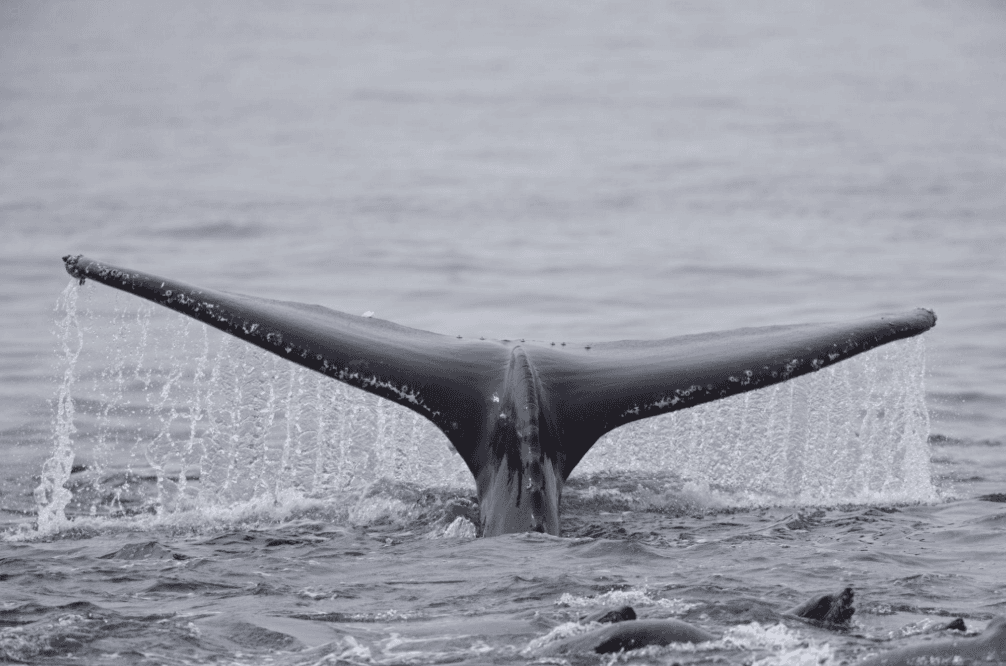
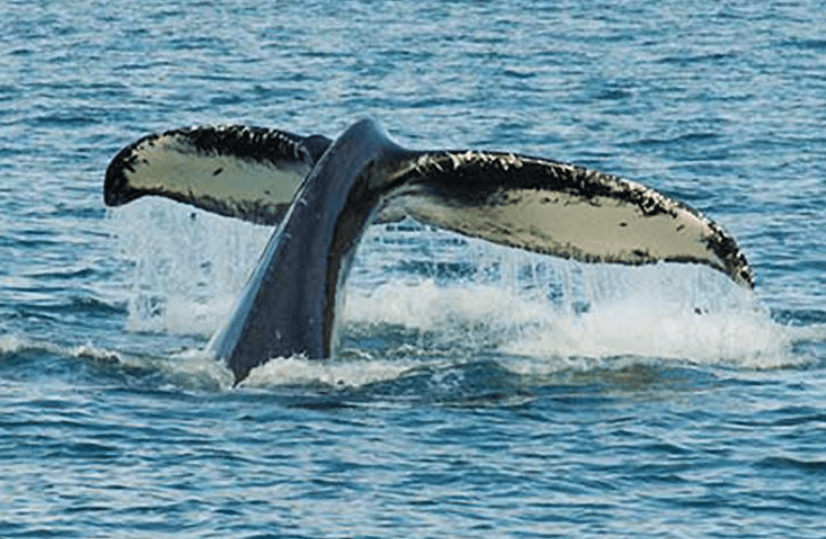
Swimming involves producing forces that move the body through water. Humpback whales generate most of their forward thrust through tail-fluke movements.
Buoyancy, by contrast, is the upward force exerted by displaced water.
A whale can swim downward even if it tends to float, just as it can swim upward while its body tends to sink. The animal's actual movement reflects the combined effects of buoyancy, gravity, swimming forces, and drag.
Understanding this distinction helps explain why a whale's diving behavior cannot be understood from its tail movements alone.
How Do Humpback Whales Return to the Surface?
Humpback whales must return to the surface to breathe air.
Their upward movement may involve active swimming, the effects of buoyancy, or a combination of both. The balance can change during the dive.
A whale that has descended into deeper water may need to produce upward thrust with its tail to reach the surface. If its buoyancy assists the ascent, that may also affect how much swimming effort is required.
Why an ascent is not always a straight line
A whale's underwater path can change according to its activity and surroundings.
It may alter its direction, adjust its body angle, or move horizontally before surfacing. Its route depends on more than buoyancy alone.
For observers on a boat, this means the whale may reappear at a location that differs from the point where it disappeared.
Can buoyancy predict when the whale will surface?
No simple observation of buoyancy can tell a whale watcher exactly when a humpback will return.
Dive duration and surfacing behavior vary. A whale's activity, swimming effort, and physiological needs all influence the dive, and its underwater condition cannot be fully determined from the surface.
It is better to understand buoyancy as one factor in the whale's movement rather than a reliable countdown to its next appearance.
How Is Buoyancy Different from Drag?
Buoyancy and drag both affect an animal moving through water, but they describe different physical effects.
Buoyancy is the upward force associated with displaced water. Drag is resistance that acts against movement relative to the surrounding water.
A whale can experience buoyancy even when it is not moving. Drag becomes relevant when it moves through the water or when water flows around its body.
Why drag matters during diving
As a whale moves, its body must push water aside and overcome resistance. Body shape and swimming speed influence that resistance.
The whale's tail provides thrust to help it move, while its body shape affects how water flows around it.
The effort required for a dive therefore depends on both vertical forces and the resistance encountered during movement.
Why the distinction matters
A whale that is sinking is not necessarily moving because of drag. Its tendency to sink is related to the balance between gravity and buoyancy.
Likewise, a whale that swims upward experiences drag even if its buoyancy also assists its ascent.
Separating these concepts makes the physics of whale movement easier to understand.
What Can Whale Watchers Learn from Buoyancy in Samaná?
Samaná is a well-known destination for seasonal observations of North Atlantic humpback whales.
During a whale-watching trip, visitors may see a whale breathe at the surface, disappear underwater, and reappear later. Much of the animal's movement between these sightings occurs beyond the observer's view.
Buoyancy helps explain some of the physical processes involved, but it does not reveal the whale's complete underwater behavior.
Understanding a disappearance
When a whale disappears beneath the waves, it may be descending, moving horizontally underwater, or following a path that is not visible from the boat.
Changes in buoyancy are part of the physics of its movement, but the observer cannot determine the animal's exact depth or trajectory from disappearance alone.
Appreciating the animal's adaptations
The ability to move between depths requires more than strength. Humpback whales must operate within the physical constraints of water pressure, buoyancy, drag, and the need to breathe air.
Understanding these factors makes it easier to appreciate the complexity of whale behavior without assuming that every dive follows the same pattern.
For responsible whale watching, visitors should allow the animals to move naturally and follow their guide's instructions rather than trying to predict or force a closer encounter.
Frequently Asked Questions
What keeps a humpback whale afloat?
Buoyancy from displaced water acts on the whale's whole body. Its average density, including its tissues and air spaces, determines whether it tends to rise or sink.
Can a humpback whale sink underwater?
Yes. Depending on its overall density, depth, and respiratory state, a whale may experience negative buoyancy and tend to sink. It can also actively swim downward.
Does lung air help a humpback whale float?
Air in the respiratory system contributes to buoyancy because air is much less dense than water. However, it is only one factor in the whale's overall buoyancy.
Does water pressure affect whale buoyancy?
Yes. Pressure increases with depth and compresses gas-filled spaces, changing their volume and their contribution to buoyancy.
Is buoyancy the same as swimming?
No. Buoyancy is an upward force caused by displaced water, while swimming involves generating forces to move through the water. Both affect a whale's movement.
Can humpback whales remain at one depth without swimming?
Their ability to maintain depth with little vertical effort depends on their buoyancy and the surrounding conditions. Even when buoyancy is close to neutral, currents and other movements may affect their position.
Does blubber control a whale's buoyancy?
Blubber contributes to overall body composition and therefore influences average body density. Its major functions include insulation and energy storage, so it should not be treated as a dedicated buoyancy-control mechanism.
Can whale watchers predict where a humpback will surface by understanding buoyancy?
Not reliably. Buoyancy is only one influence on underwater movement. A whale's direction, swimming activity, and dive behavior also affect where and when it reappears.
Conclusion
Humpback whales manage buoyancy through the combined effects of body composition, air in their respiratory system, water pressure, and the forces acting on them as they swim.
Their buoyancy can change with depth because pressure compresses gas-filled spaces. At the same time, tail-powered swimming helps the whales move downward, upward, or horizontally as needed.
For visitors watching humpback whales in Samaná, this science offers a useful perspective on what happens after a whale disappears beneath the surface. Its underwater journey is shaped by the physics of water and the specialized biology of a marine mammal that must return to breathe air.
Buoyancy does not explain every dive, but it is an important part of understanding how humpback whales navigate the ocean.

Local explorer & expert guide in Taxi Sabana de la Mar.