How Do Humpback Whales Navigate During Migration?
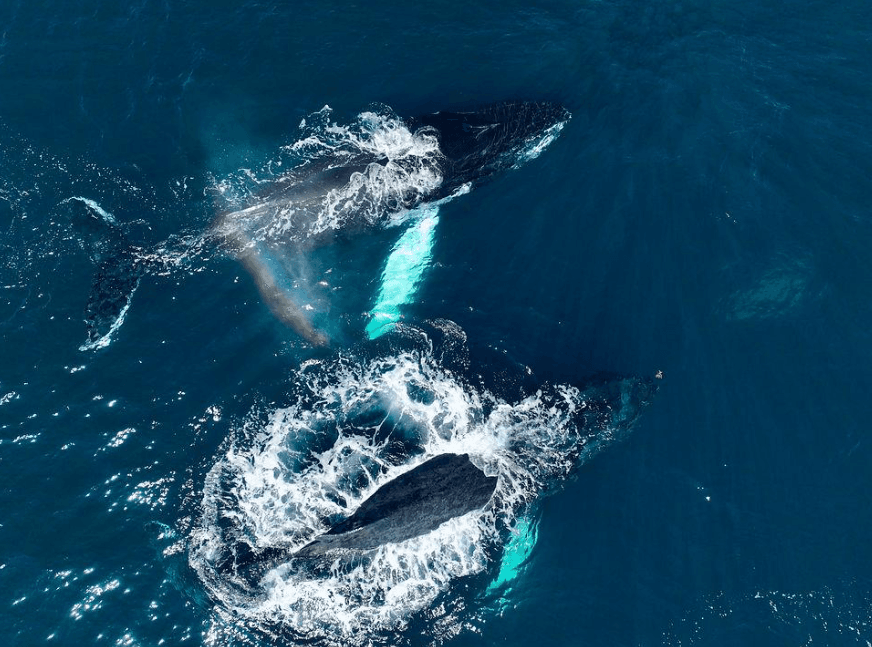
Every year, humpback whales travel between feeding areas and warmer breeding regions, covering impressive distances through the ocean. Some North Atlantic humpback whales migrate toward Caribbean waters, including the region around Samaná Bay in the Dominican Republic.
Their journeys raise an intriguing question: how do these enormous marine mammals find their way across such vast stretches of water?
Unlike travelers who can follow road signs, maps, or GPS directions, whales move through an environment where familiar landmarks may be limited or invisible from below the surface. They must navigate through changing ocean conditions while locating suitable destinations for different stages of their lives.
Scientists believe whales can use multiple sources of information to orient themselves and navigate. These may include environmental cues, learned routes, memory, and features of the Earth's physical environment. However, the precise contribution of each mechanism is still being investigated.
For travelers planning a Samaná whale-watching excursion, understanding whale navigation reveals another remarkable aspect of the animals' seasonal journey.
Why Do Humpback Whales Migrate?
Humpback whales undertake seasonal migrations between feeding areas and breeding or calving regions.
Many North Atlantic humpback whales feed in colder, productive waters during warmer months. As the seasons change, some migrate south toward tropical and subtropical waters in the Caribbean.
These destinations provide important habitat for activities associated with reproduction and early calf development. Samaná Bay is one of the places where visitors may encounter humpback whales during the winter breeding season.
The migration is not simply a journey toward warmer water. It is part of the whales' annual life cycle, connecting areas that serve different biological purposes.
Feeding and breeding regions can be separated by considerable distances, so whales must travel through large areas of ocean to reach them.
Not every whale follows an identical route or schedule. Migration patterns can vary among populations and individuals, and the behavior of a particular whale cannot be predicted from the season alone.
1. Do Humpback Whales Have an Internal Navigation System?
Humpback whales can travel across large ocean areas and reach important seasonal habitats, suggesting that they use effective ways to orient themselves.
However, scientists do not believe that one simple mechanism explains every part of whale navigation.
Navigation may involve a combination of inherited behavior, learning, memory, and information from the surrounding environment. Different cues may be useful in different circumstances.
For example, a whale traveling through open ocean may rely on different information from an animal moving through a coastal region where underwater geography and landforms are more relevant.
Researchers investigate whale navigation through observations of migration routes, repeated sightings, tracking studies, and comparisons between animals and their environments.
Although much has been learned about whale migration, the exact navigation process remains an active area of scientific research.
2. Can Whales Use the Earth's Magnetic Field?
One possible navigation mechanism involves the Earth's magnetic field.
The planet has a magnetic field that varies geographically. Some animals use magnetic information during movement, leading researchers to investigate whether whales may also use magnetic cues to help orient themselves.
The idea is scientifically interesting because a magnetic reference could provide information even when visual landmarks are unavailable.
However, it is important to distinguish a possible mechanism from a confirmed explanation. The precise role of magnetic sensing in humpback whale navigation has not been conclusively established.
Scientists continue to explore how marine animals might detect or respond to magnetic information and whether such cues influence migration routes.
It would therefore be inaccurate to claim that humpback whales navigate entirely by using a built-in compass.
Their journeys are likely more complex than a single directional system.
3. Could Ocean Conditions Help Whales Find Their Way?
The ocean is not a uniform environment. Water temperature, currents, depth, and other physical characteristics vary across regions.
These conditions may provide useful environmental information to migrating animals, although the importance of any particular cue for humpback whales depends on evidence that scientists are still investigating.
Ocean currents influence how water moves, while temperature patterns help define different marine habitats. Underwater geography also changes from broad ocean basins to continental shelves and coastal areas.
Whales encounter these features as they travel, but researchers must establish whether and how the animals use them for navigation rather than simply observing that the features exist.
The distinction matters because an environmental pattern that helps researchers understand a migration route does not automatically prove that a whale consciously uses that pattern to find its destination.
Studying multiple environmental variables together can help scientists build a more complete understanding of whale movements.
4. Do Humpback Whales Remember Migration Routes?
Memory is another important possibility in whale navigation.
Animals that repeatedly visit seasonal habitats may benefit from information gained during previous journeys. Familiarity with particular areas could help them move between feeding and breeding grounds over time.
Humpback whales are known for their recurring seasonal movements, and researchers can document individuals appearing in particular regions across different periods when suitable identification records are available.
However, the exact contribution of individual memory, inherited behavior, and social learning to a specific whale's route is difficult to separate.
A whale returning to a familiar region does not, by itself, reveal how it found its way there.
Scientists investigate these questions by combining information about individual sightings, migration patterns, and the behavior of whales over time.
For visitors in Samaná, this research helps explain why seasonal whale visits are part of a broader migration system rather than isolated appearances.
5. Can Young Humpback Whales Learn Where to Migrate?
Young whales develop within a species whose life cycle includes long-distance seasonal movements. Learning and experience may contribute to how individual whales use habitats and move through their environment.
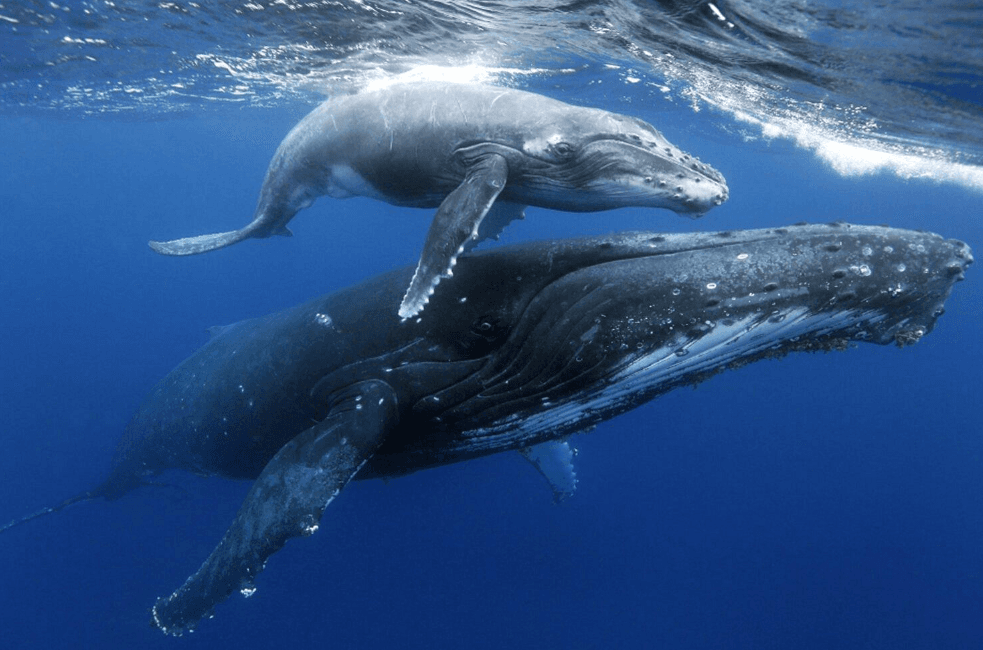
A calf remains associated with its mother during early development. During this period, it experiences the environment while accompanying an adult that is already undertaking important movements.
It is reasonable to investigate whether these experiences contribute to later movement patterns. However, scientists cannot assume that every detail of an adult whale's migration route is learned directly from its mother.
The relative importance of inherited tendencies, individual experience, and social learning remains a subject of research.
This is one reason researchers are interested in following individual whales over time. Long-term records can help reveal whether animals return to particular areas and how their movements change as they mature.
A whale's migration is therefore not just a single trip. It is part of a life history that may extend across many seasons.
6. Why Do Humpback Whales Travel to Samaná Bay?
Samaná Bay lies in the Dominican Republic and is known for seasonal visits by North Atlantic humpback whales.
During the winter breeding season, whales use Caribbean waters for activities associated with reproduction and calf development. The region offers suitable warm-water habitat during this part of their annual cycle.
The migration connects these breeding areas with feeding grounds farther north.
For travelers, this seasonal pattern explains why whale watching in Samaná is associated with particular months rather than being equally predictable throughout the year.
However, the arrival of whales does not happen according to a precise timetable that guarantees sightings on a specific day. Individual movements, environmental conditions, and the distribution of whales vary.
A responsible tour operator can explain the local season and practical arrangements, but no operator can guarantee a particular whale or behavior.
Understanding the wider migration helps visitors appreciate why Samaná is important without treating every sighting as a predictable event.
7. Do All Humpback Whales Follow the Same Migration Route?
No. Migration routes differ among humpback whale populations, and individuals may not all travel in exactly the same way.
North Atlantic humpback whales are associated with feeding areas in the North Atlantic and breeding regions in lower-latitude waters, including parts of the Caribbean.
Other humpback whale populations undertake migrations in different ocean basins.
Even within a broad population, individual routes and timing can vary. Ocean conditions, habitat use, and the animal's life stage may influence movement patterns.
This is why information about a whale population should not automatically be applied to every humpback whale worldwide.
When learning about the whales seen in Samaná, it is most useful to focus on the North Atlantic population and its seasonal movements rather than assuming that all humpback whales follow the same route.
8. How Do Scientists Study Whale Migration?
Scientists use several research methods to understand where whales travel and how their routes change.
Satellite tracking
Suitable tracking devices can provide information about the movements of individual whales over time. The resulting data can help researchers map travel routes and identify important areas.
Tagging requires specialized expertise and must follow appropriate research and animal-welfare procedures.
Photo identification
Humpback whales can sometimes be recognized from photographs of their distinctive natural markings, including the undersides of their tails.
When researchers can reliably match photographs taken at different times or locations, these records may help document an individual's movements.
Photo identification does not provide continuous tracking, but it can contribute valuable information about where whales have been observed.
Acoustic research
Underwater recordings help scientists study whale vocalizations and acoustic activity. Depending on the research design, acoustic observations can contribute information about when whales are present or vocalizing in a particular area.
Acoustic data alone do not necessarily reveal the exact route of an individual whale.
Long-term observations
Repeated sightings, research surveys, and other reliable records help scientists understand seasonal patterns and changes over time.
Each method has limitations. By combining different forms of evidence, researchers can build a more reliable picture of whale migration than any single observation would provide.
9. How Long Does a Humpback Whale Migration Take?
Migration duration varies depending on the population, the route, and the individual whale's movements.
The total journey can cover thousands of kilometres, but there is no single travel time that applies to every humpback whale.
Researchers distinguish between the overall distance between seasonal habitats and the actual route an individual takes. A whale may travel along a route that differs from the shortest possible distance between two locations.
Movement can also vary over time, so estimating a journey's duration requires suitable tracking or observation data.
For visitors, the most important point is that a whale's arrival in Samaná is part of a large-scale seasonal journey, not a short trip that begins immediately before a whale-watching excursion.
The whale may have traveled a considerable distance before entering the region.
10. Can Weather and Ocean Conditions Change Migration?
Environmental conditions can influence the movements and distribution of marine animals. Researchers therefore study ocean conditions alongside whale sightings and tracking data.
However, a change in weather does not automatically mean that a particular whale will alter its migration route or arrive earlier or later.
The relationship between environmental conditions and migration can involve several factors, and individual movements vary.
Visitors should also distinguish between large-scale migration and short-term conditions that affect a whale-watching trip. Wind, waves, and visibility may influence the excursion itself without providing a clear explanation for the whale's broader migration.
Before traveling, check the tour operator's current departure information and follow any safety guidance.
For wildlife questions, rely on credible research and avoid assuming that a single day's weather explains the behavior of all whales in the region.
11. What Can Visitors Learn from the Migration Season?
The seasonal presence of humpback whales in Samaná offers a practical example of how animal movements connect distant habitats.
A whale seen in the bay is part of a wider population whose life cycle includes movement between feeding and breeding areas.
Visitors can learn about this process by asking their guide about the regional migration, the local whale-watching season, and the research methods scientists use to study individual animals.
You can also explore educational material about whale migration before or after your excursion.
Remember that seeing a whale does not reveal its complete travel history. Unless an individual has been identified through reliable records, it is not possible to know its precise route simply from observing it at the surface.
The broader migration story makes the encounter meaningful even when the history of a particular whale remains unknown.
12. Why Whale Migration Research Matters
Studying migration helps researchers understand which habitats whales use during different parts of the year.
This information can support the identification of important feeding and breeding areas, help researchers assess changes in distribution, and contribute to conservation planning.
Migration research may also reveal how whales respond to changes in their environment. Reliable long-term information is particularly valuable because a single season cannot explain every pattern.
Conservation decisions require multiple kinds of evidence, including information about animal movements, habitat conditions, human activities, and population trends.
Visitors do not need to understand every scientific detail to appreciate the importance of this research. Recognizing that whales depend on connected habitats across large ocean areas is an important first step.
Responsible whale watching can complement that understanding by encouraging respect for wildlife and interest in marine conservation.
Responsible Whale Watching in Samaná
Whale migration is a natural process, and visitors should observe it without trying to influence the animals' movements.
Choose an operator that follows applicable wildlife-viewing rules and listen carefully to the captain and guide. Do not encourage the boat to chase a whale, block its path, or approach more closely than permitted.
Remember that the purpose of a whale-watching trip is to observe wildlife responsibly, not to guarantee a close encounter.
If whales are not visible during a particular period, that does not necessarily mean they have abandoned the region. Their distribution and movements naturally vary, and sightings cannot be guaranteed.
A respectful approach allows visitors to enjoy Samaná's marine environment while recognizing that the whales' migration continues according to their own needs.
Frequently Asked Questions
How do humpback whales navigate during migration?
Scientists believe whales may use a combination of environmental cues, memory, experience, and other orientation mechanisms. The precise role of each mechanism in humpback whale navigation is still being studied.
Why do humpback whales migrate to Samaná?
North Atlantic humpback whales visit Caribbean breeding areas during the winter season for activities associated with reproduction and calf development. Samaná Bay is one of the regions where they may be observed.
Do humpback whales use the Earth's magnetic field?
Magnetic navigation is one proposed mechanism being investigated in marine animals. However, the exact role of the Earth's magnetic field in humpback whale navigation has not been conclusively established.
Do humpback whales return to the same place every year?
Some whales have been documented returning to seasonal habitats, but movement patterns vary. A return to a region does not mean every individual follows exactly the same route or schedule.
How do researchers track whale migration?
Researchers use methods such as satellite tracking, photo identification, acoustic monitoring, and repeated sightings. Each method provides different information and has its own limitations.
How far do humpback whales travel?
Some humpback whale populations undertake migrations spanning thousands of kilometres between feeding and breeding areas. The exact distance depends on the population and the route taken.
Can weather change when whales arrive in Samaná?
Environmental conditions may influence whale movements and distribution, but weather alone cannot reliably predict when a particular whale will arrive. Sightings vary from trip to trip.
Can a whale-watching operator guarantee that I will see migrating whales?
No. Wildlife sightings depend on natural conditions and whale distribution. Check the operator's policies and current information before booking.
Conclusion: A Remarkable Journey Across the Ocean
Humpback whale migration connects distant ocean habitats and allows these marine mammals to use different regions for feeding, breeding, and raising their young.
Their ability to travel across vast stretches of water raises important questions about navigation, memory, environmental cues, and the role of experience. Scientists continue to investigate these questions using tracking technology, photographic records, acoustic research, and long-term observations.
In Samaná Bay, the seasonal arrival of humpback whales gives visitors an opportunity to observe one part of this remarkable annual cycle.
Although researchers do not yet have a complete explanation for every aspect of whale navigation, the evidence of their recurring migrations shows how effectively these animals move between important habitats.
Planning a whale-watching trip to Samaná? Explore available excursions, confirm departure details with your chosen operator, and prepare to learn about the humpback whales that visit the Dominican Republic during their seasonal migration.

Local explorer & expert guide in Taxi Sabana de la Mar.