Why Do Humpback Whales Make Sounds Underwater?
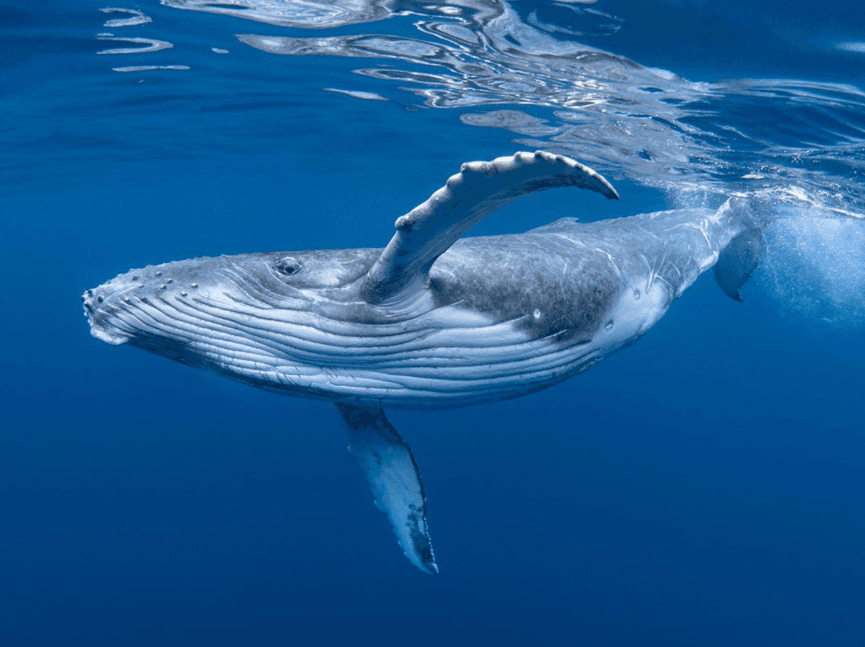
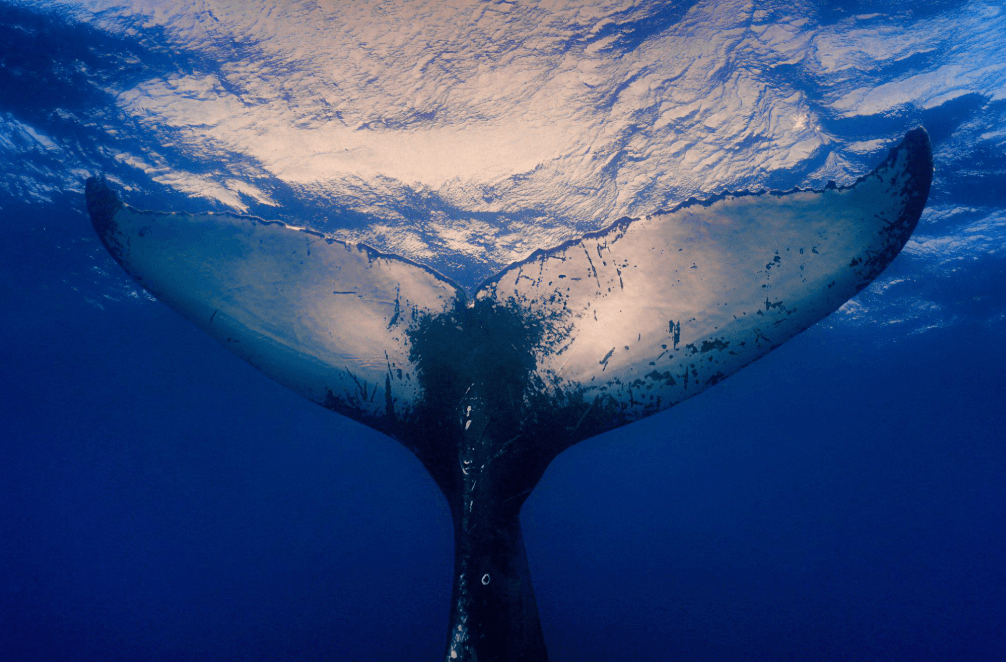
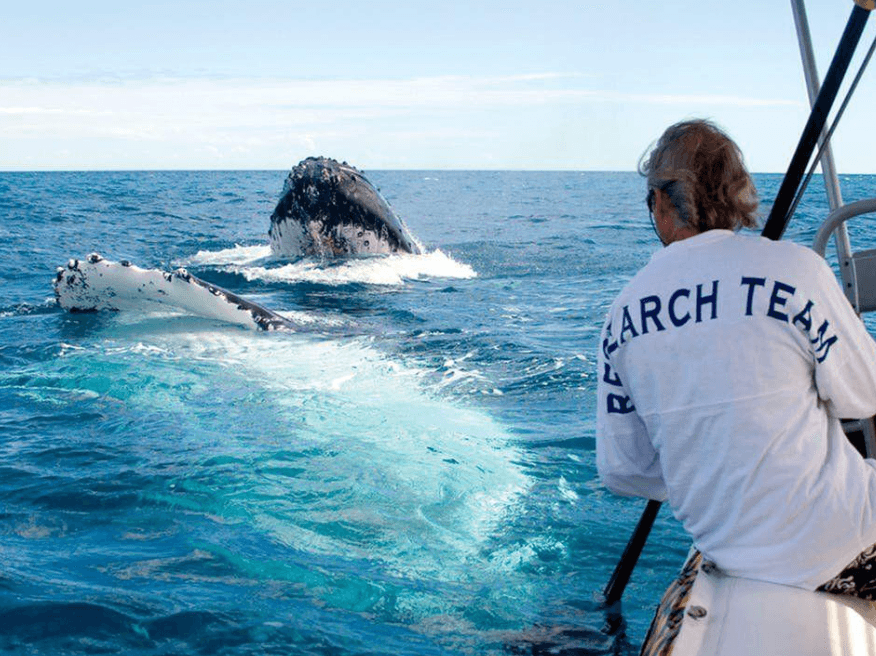
Humpback whales are famous for their impressive size, powerful movements, and remarkable songs. During the whale-watching season in Samaná Bay, visitors may see these marine mammals swimming, surfacing, or lifting their tails above the water. Yet much of their communication happens beneath the surface, where human visitors cannot easily observe it.
Why do humpback whales make sounds underwater How do these sounds help them communicate, and what makes their songs so fascinating to scientists?
Humpback whales produce a variety of sounds, including repeated sequences commonly described as songs and shorter vocalizations used in different social situations. Researchers study these sounds to better understand whale communication, behavior, and life in the ocean.
Although visitors on a boat may not hear these underwater sounds directly, learning about them adds another dimension to a whale-watching experience in the Dominican Republic.
This guide explores how humpback whales produce sounds, why they vocalize, how whale songs differ from other calls, and what scientists can—and cannot—conclude from listening to them.
What Sounds Do Humpback Whales Make?
Humpback whales produce a range of underwater sounds. Some are arranged into repeated patterns, while others are shorter and less song-like.
The best-known vocalizations are humpback whale songs. These can contain sequences of sounds that repeat in recognizable patterns, including low tones, moans, pulses, and other acoustic elements.
Humpback whales also produce shorter calls and sounds associated with social interactions. The types of sounds recorded can vary depending on the animals, the circumstances, and the environment.
Researchers use underwater recording equipment, often called hydrophones, to capture these vocalizations. By examining recordings, they can study the structure, timing, frequency, and repetition of whale sounds.
For visitors in Samaná, the important point is that humpback whales communicate in ways that are not always visible from a boat. A calm-looking whale at the surface may be part of a much more complex underwater environment.
Why Do Humpback Whales Make Sounds Underwater?
Sound can travel effectively through water, making it useful for communication in the marine environment. Humpback whales use vocalizations in social and reproductive contexts, although the purpose of an individual sound is not always known.
Several possible functions are important to understand.
1. Communication with Other Whales
Vocalizations can help whales exchange information or interact acoustically with other individuals. The ocean is vast, and visibility underwater can be limited, so sound provides a way for animals to communicate without needing to remain in direct visual contact.
However, scientists cannot always determine exactly what a particular call means. A sound may occur during a social encounter without revealing the specific information being communicated.
2. Reproductive Behavior
Humpback whale songs are especially associated with the breeding season. In breeding areas, researchers have documented singing by males.
Scientists continue to investigate the role of these songs in reproduction. They may be involved in attracting potential mates, interactions among males, or other reproductive processes, but the precise function is not fully settled.
This connection makes whale songs particularly relevant to Samaná Bay, which is known for seasonal visits by North Atlantic humpback whales during their breeding and calving period.
3. Social Interactions
Humpback whales may produce sounds during encounters with other whales. These vocalizations can occur in different social settings, but their meaning depends on context.
Researchers examine when a sound occurs, which animals are nearby, and whether the sound is repeated or associated with visible behavior. Such evidence can help scientists develop explanations without assuming that every vocalization has the same meaning.
4. Coordinating Behavior
Sound may play a role in some interactions between whales, but it would be misleading to assume that every vocalization is a command or an instruction.
Whale behavior is complex, and the relationship between sounds and actions is still an active subject of research. Scientists need recordings and behavioral observations to understand these relationships.
What Makes Humpback Whale Songs Special?
Humpback whale songs are among the most studied examples of sound production in marine mammals. They consist of structured sequences rather than simply one repeated noise.
A song may contain units that combine into phrases, with phrases repeated in larger patterns. These sequences can continue for extended periods, making them suitable for long-term acoustic study.
Researchers can compare recordings to identify similarities and differences between songs. They can also study how song patterns change over time.
One fascinating feature is that song patterns are not necessarily fixed forever. Changes can occur within a singing population, and songs may develop as whales encounter and learn from other singers.
These changes allow scientists to investigate how vocal behavior spreads and evolves among whale populations.
For travelers, whale songs offer a reminder that humpbacks have a rich acoustic world. Their lives involve more than the dramatic surface behaviors that people often associate with whale watching.
Do All Humpback Whales Sing?
No. Humpback whale singing is not performed by every whale in the same way or at the same time.
Researchers have particularly associated elaborate songs with males during the breeding season. Other whales may produce different vocalizations, including shorter calls.
This distinction matters because the words song and call are not interchangeable in every scientific context. A song generally refers to a structured sequence of repeated acoustic units, while a call is often a shorter vocalization.
The absence of a recorded song does not mean that whales are completely silent. They may be producing sounds that were not detected, or the recording equipment may not capture every relevant vocalization.
Likewise, hearing a sound does not automatically identify the sex or identity of the whale that produced it. Such conclusions require additional evidence.
How Do Humpback Whales Produce Sound?
Whales are mammals, but their anatomy and adaptations differ from those of land mammals.
Humpback whales do not simply produce underwater sounds by speaking in the same way humans do. Their vocal production involves specialized structures within the respiratory system.
Research on baleen whales indicates that sound production is adapted to their aquatic environment and does not require the same process of exhaling air through vocal cords that people use to speak.
The precise mechanics of sound production can be complex, and scientists continue to investigate how different structures contribute to different vocalizations.
What is clear is that humpback whales are highly capable sound producers. Their vocalizations can be recorded and analyzed over time, allowing researchers to investigate patterns that are difficult to observe directly.
Can Humpback Whale Songs Travel Long Distances?
Underwater sound can travel over substantial distances, but the distance at which a whale vocalization can be detected varies considerably.
Factors include the sound's frequency and intensity, water depth, temperature, underwater geography, background noise, and the sensitivity and position of recording equipment.
Some sounds may be detected far from the animal that produced them, while others may only be recorded nearby.
This is one reason scientists use hydrophones and other acoustic equipment to study whale vocalizations. The recordings help researchers examine sounds that human observers cannot reliably detect from the surface.
However, it is important not to assume that every whale song travels a particular distance. There is no single distance that applies to all sounds and ocean conditions.
Can People Hear Humpback Whales Singing During a Samaná Whale-Watching Tour?
Usually, visitors should not expect to hear natural underwater whale songs clearly from a standard whale-watching boat.
Most humpback whale vocalizations occur underwater, and the sounds do not necessarily reach people on the boat in a form they can hear.
Specialized hydrophones and suitable listening equipment can make underwater sounds available to human listeners, but whether these are used depends on the tour and its equipment.
Do not assume that an excursion includes live underwater audio unless the operator specifically confirms it.
Even without hearing the songs, visitors can enjoy the encounter by observing the whales' movements and learning about their communication from a knowledgeable guide.
The experience combines direct wildlife observation with an opportunity to understand aspects of whale life that remain hidden below the surface.
How Do Scientists Record Whale Sounds?
Scientists often use hydrophones, which are underwater microphones designed to detect sound in aquatic environments.
Hydrophones may be deployed from research vessels, attached to suitable recording systems, or incorporated into longer-term acoustic monitoring projects.
Once collected, recordings can be examined to identify vocalizations, compare sound patterns, and study when whales are acoustically active.
Researchers may combine acoustic data with visual sightings and information about location, time, and environmental conditions. Using several types of evidence can help them investigate possible relationships between vocalizations and behavior.
Not every recording contains enough information to identify an individual whale or determine what it was doing. Background noise, overlapping sounds, and recording limitations can make interpretation difficult.
For this reason, scientific conclusions depend on careful analysis rather than simply hearing a sound and assigning it a meaning.
Does Every Whale Sound Have a Specific Meaning?
Not necessarily. Some vocalizations occur in recognizable contexts, but scientists do not have a complete dictionary that translates every humpback whale sound into a precise message.
Human language provides a useful comparison only up to a point. A whale's vocalization should not automatically be treated as a word or sentence with a directly understandable meaning.
Researchers investigate patterns by examining repeated recordings, behavioral observations, and the circumstances in which sounds occur.
For example, a vocalization recorded during a social interaction may be associated with that situation, but additional evidence is needed to determine its function.
This uncertainty does not make whale communication less interesting. Instead, it shows why continued observation and research are important.
How Does the Breeding Season in Samaná Relate to Whale Songs?
Samaná Bay is associated with the seasonal presence of North Atlantic humpback whales during the winter breeding season. During this period, whales use Caribbean waters for activities connected with reproduction and early calf development.
Humpback whale songs are particularly relevant to research on breeding-season behavior because singing is strongly associated with males in these seasonal habitats.
However, visitors should not assume that every whale seen in Samaná is singing, or that a visible behavior reveals whether an animal is producing sound.
A whale can be observed at the surface while vocalizing is taking place underwater, but the relationship between what visitors see and what is being heard cannot usually be established from visual observation alone.
Researchers use acoustic recording equipment to study these hidden aspects of whale behavior.
Understanding this distinction helps travelers appreciate that whale watching reveals only part of the animals' lives.
Can Boat Noise Affect Whale Communication?
Human-generated noise is an important topic in marine science because many marine animals rely on sound in their underwater environment.
Vessel engines and other human activities can contribute to underwater noise. Depending on the circumstances, such noise may overlap with sounds used by marine animals or affect the conditions under which acoustic signals are detected.
The effects depend on factors such as noise level, frequency, duration, distance, and the animal's behavior.
It would be inaccurate to claim that every boat encounter causes a specific harmful effect. Nevertheless, reducing unnecessary disturbance and following responsible whale-watching practices are important principles.
Visitors can support responsible observation by choosing operators who follow applicable wildlife-viewing regulations and by obeying the crew's instructions.
A respectful approach allows people to enjoy whales while recognizing that the ocean is also their communication environment.
What Can Visitors Learn About Whale Communication Without Hearing It?
There is plenty to learn even when underwater sounds are not audible.
Visitors can learn why humpback whales sing, how researchers record their vocalizations, and why scientists distinguish between songs and shorter calls.
A guide may also explain how seasonal behavior in Samaná relates to the whales' annual migration and breeding cycle.
If you are interested in marine science, consider reading about acoustic research before or after your excursion. This can help you connect what you see at the surface with what scientists learn through underwater recordings.
Avoid assuming that a whale's movements reveal the exact sound it is producing. Visual observation and acoustic recording provide different kinds of evidence, and combining them requires careful analysis.
Responsible Whale Watching in Samaná
Learning about whale communication can make a Samaná excursion more meaningful, but responsible observation remains essential.
Follow the captain's instructions and the applicable local rules. Do not encourage the boat to chase whales, crowd them, or change its approach solely to obtain a closer view.
Keep noise and movement under control when instructed, and allow other passengers to enjoy the sighting safely.
If your tour includes an underwater listening demonstration, follow the operator's instructions for using the equipment. Do not assume that all excursions provide hydrophones or live audio.
The best whale-watching experience is one that combines curiosity with respect for wildlife and the marine environment.
Frequently Asked Questions
Why do humpback whales make sounds underwater?
Humpback whales produce sounds in social and reproductive contexts. Researchers study their songs and calls to better understand communication and behavior, although the precise purpose of every vocalization is not known.
What is the difference between a whale song and a whale call?
A song is generally a structured sequence of repeated acoustic units. A call is often a shorter vocalization. Humpback whales produce both types of sounds.
Do humpback whale songs help them find mates?
Songs are strongly associated with the breeding season and are generally produced by males. Scientists investigate their reproductive functions, but the precise role of singing is not fully understood.
Can I hear whale songs during whale watching in Samaná?
Do not expect to hear underwater whale songs clearly during a standard boat excursion. Specialized underwater listening equipment may make them audible, but availability depends on the tour.
How do scientists record whale sounds?
Researchers use hydrophones and other acoustic recording systems to capture underwater vocalizations. They analyze the recordings to study sound patterns and their relationship to whale behavior.
Do all humpback whales sing?
No. Singing is particularly associated with males during the breeding season, while whales also produce other types of vocalizations. The absence of a recorded song does not prove that a whale is silent.
Can scientists understand every whale sound?
No. Researchers can identify patterns and investigate the contexts in which sounds occur, but they cannot translate every vocalization into a definite message.
Can boat engines interfere with whale sounds?
Vessel noise can contribute to underwater noise and may overlap with sounds used by marine animals. The effects vary according to the circumstances, which is one reason responsible vessel operation matters.
Conclusion: Discover the Hidden Acoustic World of Humpback Whales
Humpback whales communicate in an underwater environment that most visitors never hear directly. Their songs and calls provide researchers with valuable information about vocal behavior, social interactions, and breeding-season activity.
In Samaná Bay, whale watching offers an opportunity to see these animals during an important part of their annual cycle. Learning about their acoustic lives adds another layer to the experience, even when their songs remain beyond the reach of ordinary human hearing.
The more we understand about whale communication, the more we recognize how much remains to be discovered beneath the ocean's surface.
When planning a whale-watching excursion in Samaná, choose a responsible operator, follow the crew's instructions, and enjoy the opportunity to observe these remarkable animals in their natural environment.
Ready to experience humpback whales in Samaná? Explore available whale-watching excursions, confirm the departure location and tour details with your operator, and prepare for a memorable wildlife experience in the Dominican Republic.

Local explorer & expert guide in Taxi Sabana de la Mar.