How to Photograph Humpback Whales in Samaná Without Disturbing Them
Photographing humpback whales in Samaná Bay can be one of the most memorable parts of visiting the Dominican Republic during whale-watching season. These enormous marine mammals offer remarkable photographic opportunities, from broad views of their backs to moments when a tail rises above the water.
However, photographing whales is different from photographing landscapes or stationary wildlife. Whales move unpredictably, the boat may rise and fall with the waves, and the distance between your camera and the animal can change quickly. Lighting and sea conditions can also affect the final image.
The best whale photographs do not depend entirely on expensive equipment. Preparation, patience, good observation, and respect for wildlife all play important roles.
This guide explains how to prepare your camera, choose useful settings, compose better photographs, and enjoy whale watching in Samaná while keeping the animals' welfare a priority.
Why Is Samaná Bay a Good Place for Whale Photography?
Samaná Bay, on the northeastern coast of the Dominican Republic, is associated with the seasonal presence of North Atlantic humpback whales. During the winter breeding season, whales visit the region for activities connected with reproduction and early calf development.
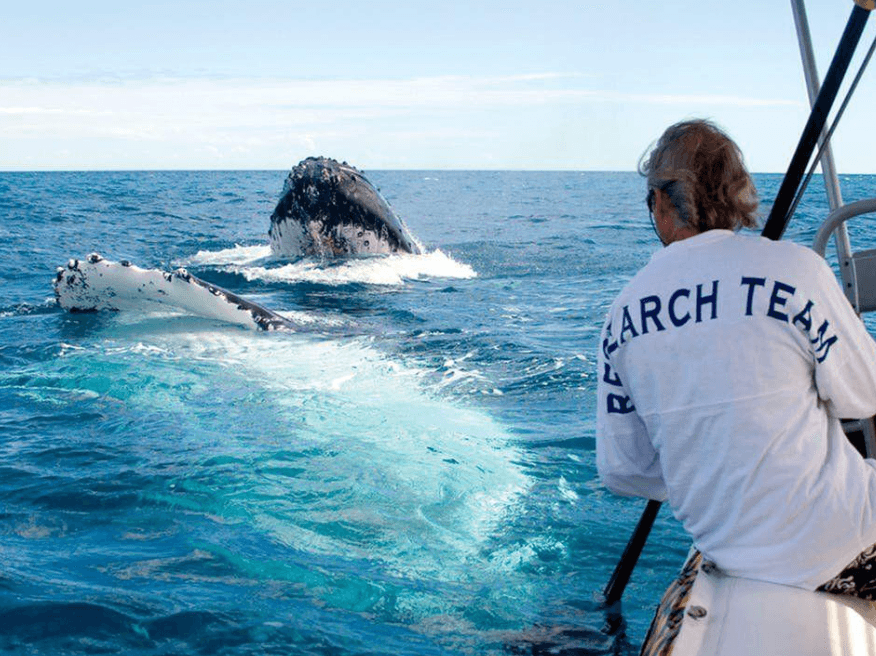
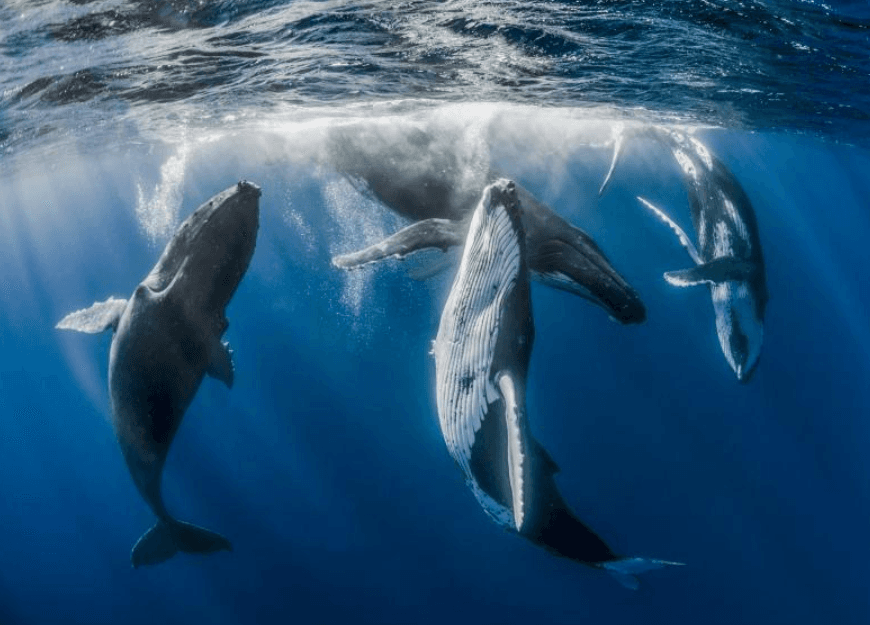
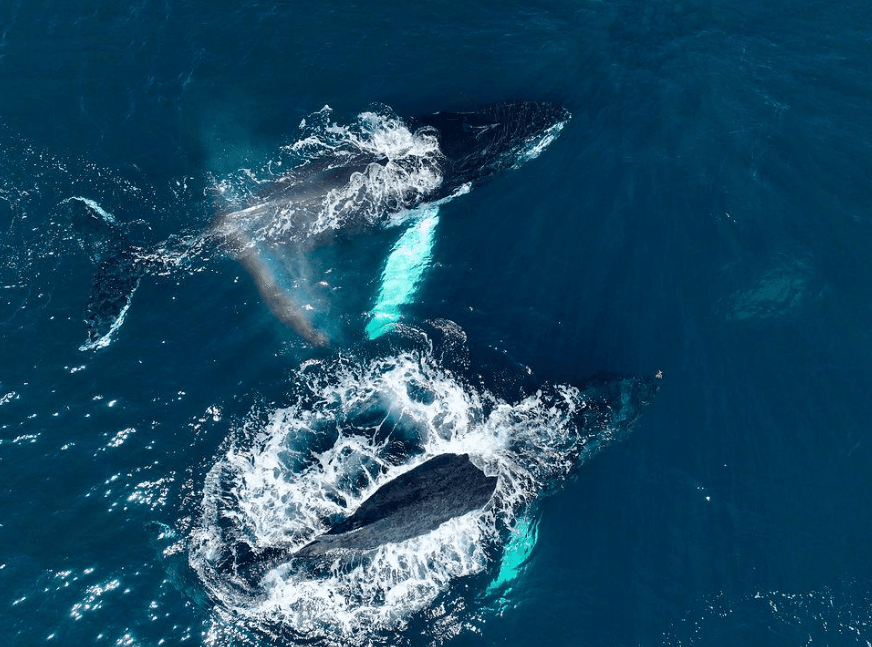
Their size, contrasting markings, and occasional appearances above the surface create interesting photographic possibilities. A whale's broad back, tail flukes, or interaction with the surrounding seascape can each produce a different kind of image.
Not every excursion will produce the same photographic opportunities. Whales may remain submerged for extended periods, surface at a distance, or appear only briefly. Weather, sea conditions, wildlife activity, and the location of the animals all influence what visitors can photograph.
For that reason, approach a whale-watching trip as a wildlife experience rather than a guaranteed photo session.
1. Choose a Camera That Suits Your Trip
You do not need a professional camera to take memorable whale photographs. The right equipment depends on your budget, experience, and preference for carrying light or specialized gear.
Smartphone cameras
A modern smartphone can capture useful photographs when a whale surfaces reasonably close to the boat. Smartphones are convenient because they are lightweight and easy to operate.
For better results:
- Clean the camera lens before boarding.
- Use the standard camera app and become familiar with its zoom controls.
- Avoid extreme digital zoom, which can make distant subjects look blurry.
- Keep the phone secure with a suitable grip or wrist strap.
- Take several photographs when the opportunity arises, rather than relying on one frame.
Smartphones work particularly well for wider compositions that include the sea, boat-free scenery, and the general environment.
DSLR and mirrorless cameras
A DSLR or mirrorless camera gives you more control over shutter speed, focus, and exposure. A telephoto zoom lens can help photograph whales that remain at a respectful distance.
A versatile zoom lens may be more practical than carrying several lenses on a moving boat. Choose equipment you can handle comfortably and protect from splashes.
Action cameras
Action cameras can be useful for capturing wide views of the seascape and documenting your overall excursion. However, their wide-angle lenses are usually less suitable for close-up images of distant whales.
Whichever camera you choose, learn its basic controls before the trip. Time spent navigating menus while a whale surfaces is time you could spend observing the experience.
2. Prepare Your Camera Before Boarding
A little preparation can make a significant difference when a whale appears unexpectedly.
Charge your batteries fully and bring a spare if your camera supports interchangeable batteries. Make sure your memory card has sufficient space, particularly if you plan to capture bursts of photographs or record video.
Check the following before departure:
- The battery is charged.
- The memory card has available storage.
- The lens is clean.
- The camera settings are easy to access.
- The wrist strap or camera strap is secure.
- Protective equipment is suitable for the conditions.
- Important photographs from previous trips have been backed up.
Keep your equipment accessible without allowing it to interfere with your balance or the movement of other passengers.
A waterproof bag or protective cover can help guard against splashes, but protection should never make the camera difficult to control. Saltwater can damage electronics, so wipe away moisture carefully with an appropriate clean cloth.
3. Use Practical Camera Settings for Moving Whales
Humpback whales can appear and disappear quickly. A camera setting that works for a stationary landscape may not be suitable for a moving animal on a boat.
For cameras with manual controls, shutter speed is particularly important.
Start with a fast shutter speed
A relatively fast shutter speed helps reduce motion blur caused by the whale's movement and the boat's movement.
As a starting point, try around 1/1000 of a second when photographing active whales in adequate light. You may need to adjust this depending on the available light, lens, and speed of the subject.
If the whale is moving slowly or light is limited, a slower shutter speed may be necessary. Check your results and adjust rather than treating one setting as correct for every situation.
Use continuous autofocus
If your camera has continuous autofocus, often labeled AF-C or AI Servo depending on the manufacturer, it can help maintain focus as the subject moves.
Keep the focus area broad enough to follow the whale without making it difficult to distinguish the animal from the water.
Consider burst mode
Burst mode captures a sequence of images while you hold the shutter button. It can improve your chances of recording a brief moment, such as a tail rising or a whale breaking the surface.
Use it selectively. Constantly capturing large bursts can fill your memory card quickly and make it harder to find your best photographs later.
Watch your exposure
Bright reflections from the sea can confuse automatic exposure systems. Review your photographs when there is a safe and appropriate opportunity, and make adjustments if the whale appears too dark or the water highlights are washed out.
For beginners, automatic or shutter-priority mode is a sensible starting point. Learning one or two useful controls is often more effective than attempting to manage every camera setting at once.
4. Anticipate the Moment Instead of Chasing It
Wildlife photography rewards observation. Rather than looking through the viewfinder continuously, spend time watching the water and listening to your guide.
Your guide may point out a whale's location or help passengers notice an animal approaching the surface. Follow the crew's instructions and keep your attention on the area they identify.
Once you have a general idea of where the whale is, prepare your camera and frame the surrounding water. This can help you respond when the animal surfaces.
Avoid assuming that a whale will appear in the same place or repeat the same action. Wildlife behavior is unpredictable, and no guide can guarantee a particular photographic moment.
It is also important not to pressure the boat operator to approach closer simply because you want a better picture. A longer lens, a wider composition, or a photograph showing the whale in its natural environment can produce a more meaningful image without requiring a closer approach.
5. Photograph More Than Just the Whale's Tail
A whale's tail flukes can make a striking photograph, but they are not the only worthwhile subject.
Try a variety of compositions when opportunities arise.
The broad back
A photograph of a humpback's back emerging from the water can communicate the animal's size and shape. Leave enough space around the subject to show the surrounding sea.
The tail flukes
When a whale raises its tail, the underside may reveal distinctive markings. Use a fast shutter speed and keep the camera ready, but remember that not every dive includes a visible tail lift.
The wider seascape
A whale photographed within a broad view of Samaná Bay can tell a richer travel story than a tight close-up alone. The surrounding water, distant coastline, and natural light can help establish the setting.
The water's surface
Ripples, reflections, and changing light may add atmosphere to a photograph. If a whale is visible at a distance, including the surrounding environment can create a sense of scale.
A sequence of moments
When conditions allow, a short sequence may tell a story: the whale surfaces, moves through the water, and disappears again. Select the strongest frames rather than publishing every photograph.
Always follow your guide's instructions and applicable wildlife-viewing rules while composing your images.
6. Understand Light and Weather Conditions
Lighting can transform the appearance of a photograph. Bright conditions may reveal details on the whale's back, while softer light can create a calmer mood.
However, the sea reflects sunlight in ways that may create glare or strong highlights. If possible, adjust your shooting angle without changing your position in a way that compromises safety or disturbs other passengers.
Overcast conditions are not necessarily bad for photography. Softer light can reduce harsh contrasts, although you may need a higher ISO or a wider aperture to maintain a fast shutter speed.
Wind and waves can make it harder to hold a camera steady. Secure your equipment, maintain your balance, and avoid leaning over railings to obtain a photograph.
Do not prioritize an image over your safety. If the crew asks passengers to sit down, move, or put equipment away, follow those instructions immediately.
7. Protect Your Camera From Saltwater and Sun
A whale-watching boat is a challenging environment for electronic equipment. Spray, humidity, direct sunlight, and accidental drops can damage your camera.
Use a secure strap and keep spare batteries and memory cards in a protected place. A lens hood may help reduce unwanted glare, while a suitable protective cover can reduce exposure to splashes.
Avoid changing lenses unnecessarily in windy or wet conditions. Salt and moisture can enter equipment during lens changes.
If your camera gets splashed, follow the manufacturer's cleaning instructions. Do not assume that a device is waterproof unless its specifications explicitly support that use.
Sunscreen, water, and other personal items should be stored separately from sensitive camera equipment. A dry bag can be useful for protecting belongings when conditions change.
8. Photograph Whales Responsibly
Responsible wildlife photography means accepting that the whale's welfare comes before the photograph.
A good whale-watching experience should allow visitors to observe wildlife without creating unnecessary disturbance. Follow the tour operator's instructions and the applicable rules for whale watching in the Dominican Republic.
Keep these principles in mind:
- Never encourage a captain to pursue, crowd, or cut across a whale's path for a photograph.
- Do not ask the crew to disregard viewing restrictions to improve a camera angle.
- Follow instructions about distance, boat movement, and passenger positions.
- Do not throw objects into the water or attempt to attract whales.
- Keep noise and unnecessary movement under control.
- Avoid putting yourself or others at risk while photographing.
- Respect other passengers' opportunities to observe the animals.
Responsible photography also means avoiding misleading captions. Do not claim that a photograph proves a specific behavior, emotional state, or interaction unless the evidence supports that interpretation.
The goal is to document what you actually observed, not to manufacture a dramatic story.
9. Take Photographs Without Missing the Experience
It is easy to spend an entire excursion looking at the world through a camera screen. Yet whale watching offers more than photographs.
Consider alternating between short periods of photography and simply watching the whales. When a guide identifies a good opportunity, capture a few images, then lower the camera and enjoy the moment.
This approach can also improve your photography. Looking at the whale directly helps you understand its movement and notice what is happening beyond the edges of your frame.
If you are traveling with family or friends, consider taking turns photographing and observing. Everyone should have an opportunity to experience the excursion without being expected to document every moment.
Remember that a trip can be successful even if you return with only a few good photographs. The weather, wildlife, and sea conditions are not under your control.
10. Improve Your Photographs After the Trip
After returning to shore, review your images and select the photographs that best communicate the experience.
Look for sharp focus, useful composition, natural colors, and a clear subject. Remove duplicate images and keep a backup of your original files.
Basic editing can improve exposure, contrast, and cropping. Avoid excessive sharpening, unnatural colors, or edits that change the apparent size or behavior of the whale.
When sharing photographs online, use descriptive captions and accurate location information. If you publish images of wildlife, consider adding a short reminder that the animals were observed from a responsible distance.
Useful file names can also help organize your travel photography. For example:
samana-humpback-whale-tail.jpghumpback-whale-samana-bay.jpgdominican-republic-whale-photography.jpg
Use these names only for images that actually match their descriptions. For website images, write concise alt text that explains the visible subject rather than stuffing the description with repeated keywords.
What Should You Bring for Whale Photography in Samaná?
Your equipment list can remain simple. The best setup is one that lets you photograph comfortably without carrying unnecessary gear.
Consider bringing:
- A charged smartphone or camera
- A suitable zoom lens, if you use a camera with interchangeable lenses
- A spare battery and memory card
- A secure camera strap
- A protective bag or cover for splashes
- A microfiber lens cloth
- Sun protection and drinking water, following the operator's guidance
- A small dry bag for personal belongings
Check the tour operator's equipment and passenger guidance before departure. Boat facilities, luggage space, and conditions may vary.
Frequently Asked Questions
Do I need a professional camera to photograph humpback whales in Samaná?
No. A smartphone can capture memorable images, particularly when the whale is visible at a suitable distance. A camera with a telephoto zoom lens can provide additional flexibility, but preparation and timing are important regardless of the equipment.
What camera settings are best for whale photography?
For a camera with manual controls, a fast shutter speed—around 1/1000 of a second as an initial starting point—can help freeze movement in good light. Continuous autofocus and burst mode may also be useful. Adjust settings to suit the light and sea conditions.
Can I photograph whales from a whale-watching boat?
Photography is generally a normal part of many whale-watching experiences, but the available opportunities depend on the tour, sea conditions, and wildlife activity. Follow the operator's safety instructions and applicable wildlife-viewing rules.
Will I definitely photograph a whale breaching?
No. Breaching and other dramatic behaviors cannot be guaranteed. Whales may remain below the surface or display behaviors that are difficult to photograph. Enjoy the experience without expecting a particular action.
How can I protect my camera from seawater?
Use a secure strap and suitable protection against splashes. Keep equipment stored safely when it is not in use, and follow the manufacturer's cleaning instructions if it gets wet. Do not assume that your camera is waterproof without checking its specifications.
Is it better to photograph or record video?
It depends on what you want to remember. Photographs are useful for capturing individual moments, while video can document movement and the atmosphere of the excursion. Consider switching between them only when conditions allow, and follow the crew's instructions.
How can I photograph whales without disturbing them?
Respect the required viewing distance, never encourage a boat to chase or crowd whales, and follow the guide's instructions. Use your camera's zoom rather than seeking a closer approach, and prioritize wildlife welfare over getting a particular shot.
Final Thoughts
Photographing humpback whales in Samaná is an opportunity to combine travel, nature, and photography. A charged camera, sensible settings, a secure grip, and an understanding of changing sea conditions can help you make the most of your excursion.
Most importantly, let the whales determine the experience. Their appearances and movements are unpredictable, and no photograph is worth disturbing wildlife or risking anyone's safety.
Prepare your equipment, listen to your guide, take photographs when opportunities arise, and leave time to appreciate Samaná Bay with your own eyes. The most rewarding memory may be the moment you put the camera down and simply watch a humpback whale move through the water.
Ready to experience whale watching in Samaná? Explore available excursion options, confirm the departure location and tour details with the operator, and plan a responsible wildlife-watching experience during the season.

Local explorer & expert guide in Taxi Sabana de la Mar.